JA
Jaytiss
YouTube
“Personally, I like this IEM. I think it's a good one.”Watch from 15:30
TRUTHEAR
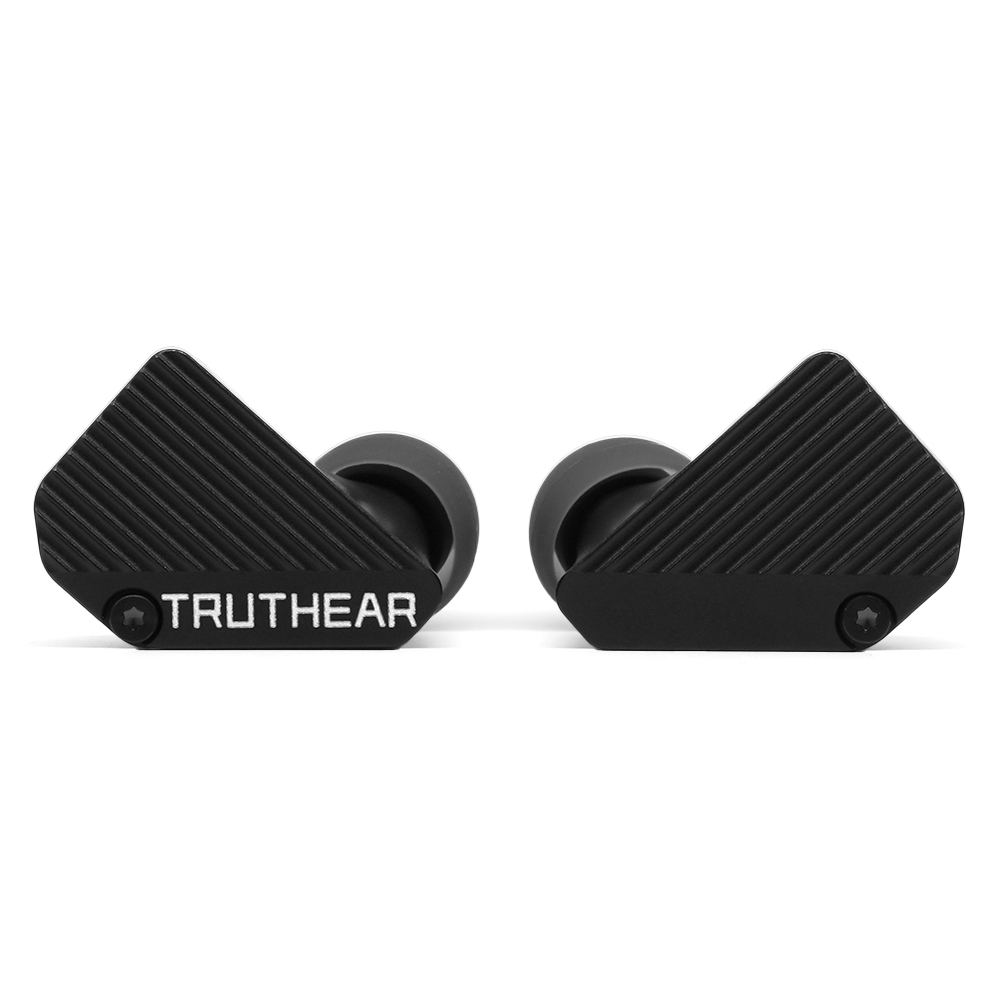
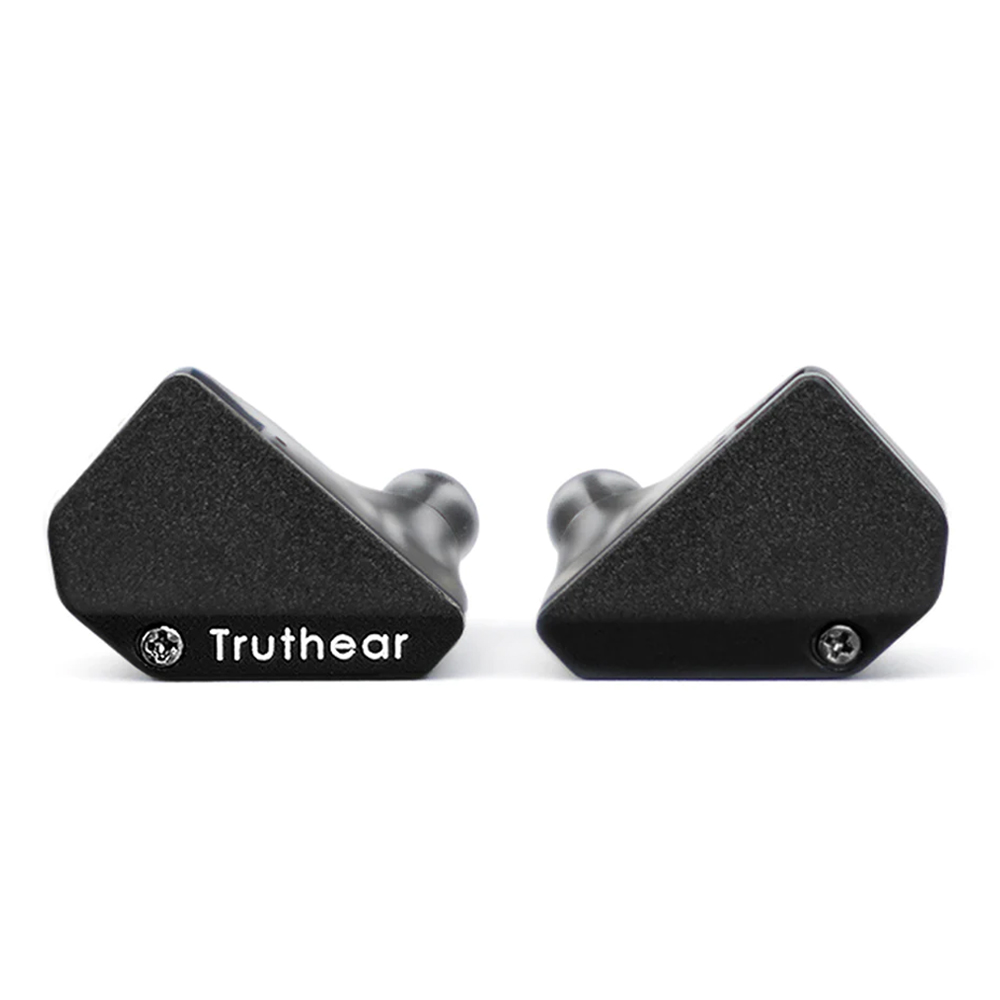
TRUTHEAR's second release, after the Crinacle ZERO collab put them on the map, was supposed to be the difficult sophomore record. Instead, the HEXA became the under-$100 reference point, and review coverage since late 2022 still hasn't found a clear replacement. Most serious HEXA coverage lands on the same comparison: a mini Moondrop Blessing 2, the $320 IEM that defined meta tuning, rebuilt for $80 with a 1DD+3BA hybrid. The tuning is where the consensus converges hardest. Neutral, uncolored, and close enough to the meta target that reviewers stopped hedging about it. Midrange clarity and vocal presentation drew near-unanimous praise, and the bass story barely changes from review to review: fast, controlled, accurate, and short on slam. That leaves hip-hop and EDM listeners wanting more, while vocal, acoustic, and instrumental tracks are where the HEXA cashes in. Where the consensus splits is treble. Most hear it as smooth and well-extended, but a smaller camp hears a bit of upper-mid and mid-treble spice on brighter masters. That tracks with the slight pinna-gain forwardness several reviewers flagged (the kind of nitpick you only bother naming when the rest is this tidy). A second split shows up in stage: most call it intimate or in-your-head, while others think the imaging is sharp enough that separation still creates usable space. Where reviewers got picky is fit. The angular 3D-printed resin shell and aluminum faceplate usually wore comfortably, but the wide, lipless nozzle is what keeps coming up. Small ear canals can lose that fit fight, and the stock tips slip off more often than they should. The included tip set gives you a useful map: narrow-bore silicone lifts mid-bass clarity, wide-bore opens up separation and detail, and foam smooths the highs at the cost of bass tightness. The stock cable is the same functional silver-plated 2-pin lead TRUTHEAR ships with the ZERO. No mic. No drama. The faux-leather pouch is soft and pocketable, not a display-case accessory. On source gear, the consensus is simple. Phones and basic dongle DACs run it cleanly, and extra power adds a little shove to dynamics and stage, not a wholesale change in character. It also takes EQ well, though mid-bass boosts run into the 160Hz crossover wall sooner than bassheads will like. That is why a few reviewers frame it as a translation tool for engineering and edit work. The common read is honest, low-color playback, even if that honesty can feel a bit dry. The TRUTHEAR PURE showed up in 2025 at just under $90 as the warmer, thicker sibling. Not a replacement. The Moondrop Aria 2 sits just above at $89.99 as the laid-back, musical alternative, while the Sennheiser IE 200 brings a friendlier fit and more treble air at $150. And if the HEXA's whole pitch is budget meta tuning, the shadow over it is still the Blessing 2: reviewers keep coming back to how close HEXA gets for about a quarter of the money. What matters now isn't launch hype. It's that the rest of budget Chi-Fi under $100 still has to answer to this tuning.
“Personally, I like this IEM. I think it's a good one.”Watch from 15:30
“Buy the HEXA if one, your budget is under $150 and you want to experience what we audiophiles mean by meta tuning or normal sound.”Watch from 4:50
“Honestly, these are probably one of the best values at $80, and one of the best IEMs that you could get under $100.”Watch from 12:23
“For me, it's become my new benchmark for what good performance should sound like at this price point.”Watch from 6:03
“do I recommend these? Sure. Absolutely”Watch from 12:40
“I think that at even double the price this IM, it would be like an easy recommendation. At 80 bucks, it's a no-brainer.”Watch from 26:38
How well the HEXA suits different use cases, based on expert reviews.
The Chi-Fi consensus puts the TRUTHEAR HEXA in the budget reference seat for critical work. Ken Creates points to its bright-neutral tonality, calling out standout imaging and detail retrieval. Headphone Zone praises the tuning as natural and close to the meta target, marking it as a set that simply gets out of the way. The 1DD+3BA hybrid stays coherent, the midrange remains uncolored, and separation holds up well enough to track individual lines on dense mixes. Phones and basic dongles drive it cleanly, removing source pairing as a barrier. Bassheads will inevitably want more slam. Detail listeners get a reliable translation tool.
Hangout.Audio puts the HEXA on the meta target with what they call simply "normal sound," and that is exactly the brief for studio monitoring work under $100. Ken Creates and Headphone Zone both point to clean midrange articulation, honest layer separation, and the kind of detail retrieval that exposes bad edits. The 1DD+3BA hybrid stays coherent through vocal passes and dialogue work. That slight pinna-gain forwardness actually helps mix-checking clarity. Drivability is a non-issue from any clean dongle. Fit is the catch. The wide lipless nozzle and loose stock tips can sabotage seal consistency, forcing engineers to tip-roll before trusting what they hear.
The Chi-Fi consensus has the TRUTHEAR HEXA pinned as the budget value reference at $79. Ken Creates calls it one of the best values at $80, Headphone Zone considers it a new benchmark, and Hangout.Audio notes it still lacks direct competition for its neutral tuning years after release. The 1DD+3BA hybrid hits the meta target with midrange honesty that usually costs three or four times this. The included tip selection is genuinely useful. That leaves the basic stock cable and wide, lipless nozzle as the obvious cut corners. Buyers chasing uncolored meta tuning under $100 will not find a cleaner answer.
The TRUTHEAR HEXA secures its place at the desk through passive isolation and midrange clarity. Headphone Zone praises the isolation. Ken Creates focuses on the articulation. Together, these traits anchor long focus sessions. Neutral tuning means lower listening volumes still resolve vocals cleanly, which is critical for shared spaces where you cannot crank the dial. Treble stays controlled to avoid workday fatigue, though the upper-mid lift can push forward on brighter masters. The 3D-printed resin shell sits light in the ear. The catch is the stock cable. It lacks a mic and carries some microphonics, forcing a swap for call duty. Buyers wanting honest playback at quiet volumes get a precise, low-fatigue tool.
View all reviews by Jaytiss →
View all reviews by Hangout․Audio →
View all reviews by Ken Creates →
View all reviews by Headphone Zone →
View all reviews by in-Ear Fetish →
View all reviews by Super* Review →